 Power to The Bakers.
Allergen Control in Commercial Flour Supply: Preventing Cross-Contamination
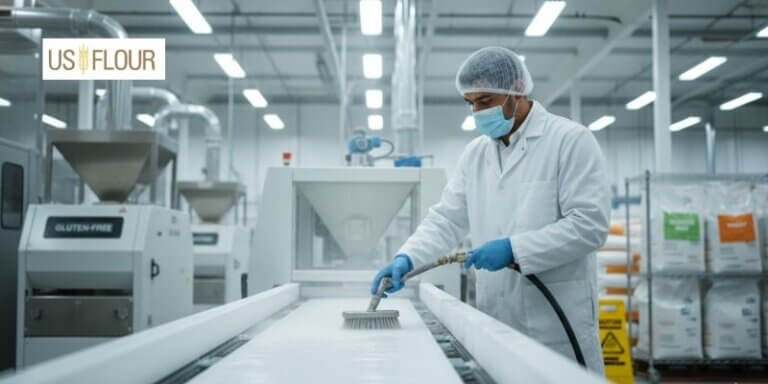
For many bakeries and food businesses, allergen safety becomes a priority only when customers start asking:
“Are your products safe for people with allergies?”
At that moment, the focus shifts beyond recipes and processes to something deeper—the sourcing of ingredients.
Even if your products are designed to be allergen-free, the risk of cross-contamination can begin long before production, especially when working with the wrong commercial flour supplier.
That’s why allergen control is not just a kitchen responsibility—it’s a supply chain decision.
Why Allergen Control Starts with Your Flour Supplier
By the time flour reaches your facility, it has already gone through multiple stages:
- Milling
- Processing
- Packaging
- Transportation
At any of these stages, cross-contact with allergens like soy, dairy, or nuts can occur—especially in facilities that handle multiple products.
This means even if your recipe is allergen-free, your ingredients may not be.
That’s why choosing the right commercial flour supplier is not just about supply—it’s about food safety.
Cross-Contamination: The Real Risk in Flour Supply
Cross-contamination is one of the biggest risks in the food industry.
Flour, by nature, is:
- Fine and airborne
- Easily transferable
- Difficult to fully contain
Even trace amounts of allergens can transfer through:
- Shared equipment
- Air particles
- Storage or packaging surfaces
For example, if wheat flour is processed on the same equipment as soy flour without strict cleaning protocols, allergen residues can remain.
For food businesses, this isn’t just a quality issue—it’s a customer safety risk.
What to Expect from a Reliable Bulk Flour Supplier
Not all suppliers follow the same standards. A professional bulk flour distributor should provide complete transparency and strict allergen control practices.
Here’s what to look for:
1. Dedicated Production Lines
Facilities that separate allergen and non-allergen products significantly reduce contamination risks.
2. Validated Cleaning Protocols
Cleaning processes should be tested and proven to remove allergen residues—not just visually clean surfaces.
3. Clear Documentation & Labeling
Reliable suppliers provide:
- Allergen declarations
- Product specifications
- Safety documentation
4. Certifications & Compliance
Look for suppliers following:
- HACCP (Hazard Analysis Critical Control Point)
- GFSI-recognized standards
These ensure allergen control is part of a structured food safety system.
How US FLOUR Supports Safe and Reliable Supply
At US FLOUR, we understand that consistency alone isn’t enough—safety and transparency matter just as much.
We work with trusted milling partners and maintain strict sourcing standards to ensure:
- Reliable and consistent flour quality
- Clear product specifications and documentation
- Supply chain practices aligned with food safety expectations
- Support for businesses that prioritize allergen awareness
For bakeries, restaurants, and food manufacturers, this means greater confidence in every batch you receive.
Best Practices for Allergen Control in Your Facility
Even with a reliable flour supplier, internal handling plays a critical role.
Storage
- Keep allergen and non-allergen ingredients separate
- Use clearly labeled containers
- Designate specific storage areas
Handling
- Avoid sharing scoops, bins, or tools
- Clean equipment thoroughly between uses
- Implement strict handling procedures during busy operations
Cleaning: More Than Just Routine Maintenance
Standard cleaning is not enough for allergen control.
Validated cleaning ensures:
- Allergen residues are actually removed
- Surfaces are safe for the next production batch
Large facilities often test surfaces post-cleaning. For smaller businesses, consistency and proper procedures are key.
Team Training Is Critical
Even the best systems fail without proper execution.
Make sure your team understands:
- What allergens are present
- How cross-contamination occurs
- Why separation and cleaning matter
- What to do in case of spills or mix-ups
When employees understand the impact, compliance improves.
Transportation: The Overlooked Risk
Flour transportation is another potential contamination point.
Ask your supplier:
- Are delivery trucks cleaned between loads?
- Is flour properly sealed during transit?
These small details can have a big impact on product safety.
A Simple Rule to Follow
Allergen control comes down to three things:
Control where ingredients go, what they touch, and how they’re handled.
This applies across the entire chain—from supplier to storage to production.
Final Thoughts
Allergen control in commercial flour supply is not optional—it’s essential for any responsible food business.
It starts with choosing a trusted bulk flour supplier, continues with proper in-house practices, and depends on a well-trained team.
More importantly, it builds trust.
Every customer who buys your product relies on the accuracy of what you claim. Ensuring proper allergen control is part of delivering on that promise—every single time.
📞 Looking for a Reliable Bulk Flour Supplier?
If your business prioritizes consistency, safety, and transparency, US FLOUR is here to support you.
Get in touch with our team to learn more about our products and supply capabilities.